

26 July 2024
Researchers at the International Agency for Research on Cancer (IARC) are involved in projects with partners and with the World Health Organization (WHO) to prevent and study infections with hepatitis viruses, which are important drivers of hepatocellular carcinoma, the most common form of liver cancer. Infections with hepatitis viruses also cause some cases of non-Hodgkin lymphoma, some cancers of the bile duct, and other liver diseases.
Among the hepatitis viruses, those of most concern are hepatitis B virus (HBV) and hepatitis C virus (HCV). WHO estimates that 254 million people were living with HBV and 50 million people were living with HCV in 2022. IARC scientists estimate that HBV caused 380 000 cases of cancer and HCV caused 170 000 cases of cancer globally in 2020.
In 2025, the IARC Monographs programme will evaluate the carcinogenicity of hepatitis D virus (HDV) and the mechanisms by which it may cause cancer. HDV can only infect people who are already infected with HBV, and it is estimated that about 12 million people worldwide are co-infected with HBV and HDV.
Co-infection with HBV and HDV is an important public health issue because co-infection causes more rapid progression towards liver cancer and liver disease-related death. Approximately 1 in 6 cases of cirrhosis and 1 in 5 cases of liver cancer among people with HBV infection are caused by co-infection with HDV.
IARC and partners are working to better understand these viruses, their contribution to the global cancer burden, and the impact of measures to control infections with HBV and HCV, to more effectively prevent, and save lives from, cancer.
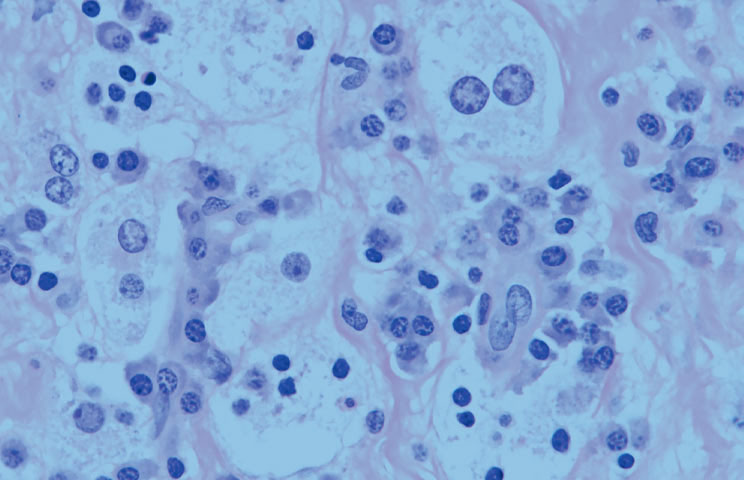
Publication of the WHO Classification of Tumours, 5th Edition, Volume 11: Haematolymphoid Tumours
WHO Classification of Tumours: Haematolymphoid Tumours is now available in print format.
Haem…
24.07.2024

Multicancer early detection tests — keeping a high bar for evidence of benefit
A new commentary article on multicancer early detection tests from a scientist in the Genomic Epi…
22.07.2024

IARC Monographs Volume 133: Anthracene, 2-bromopropane, butyl methacrylate, and dimethyl hydrogen phosphite
The International Agency for Research on Cancer (IARC) is pleased to announce that Volume 133 of …
15.07.2024

